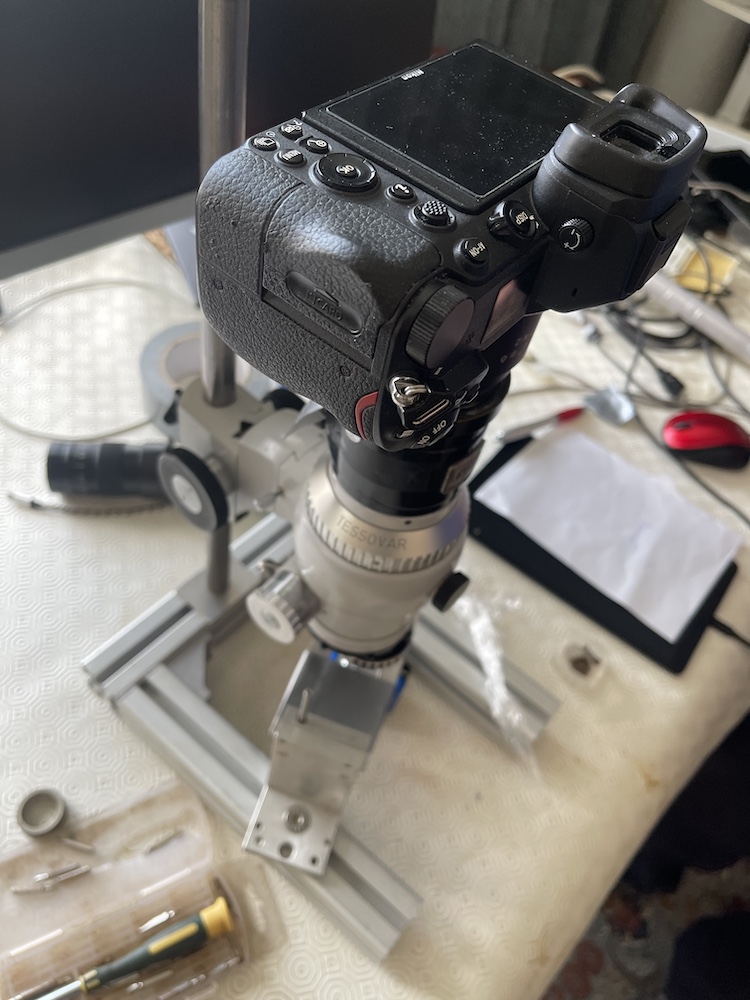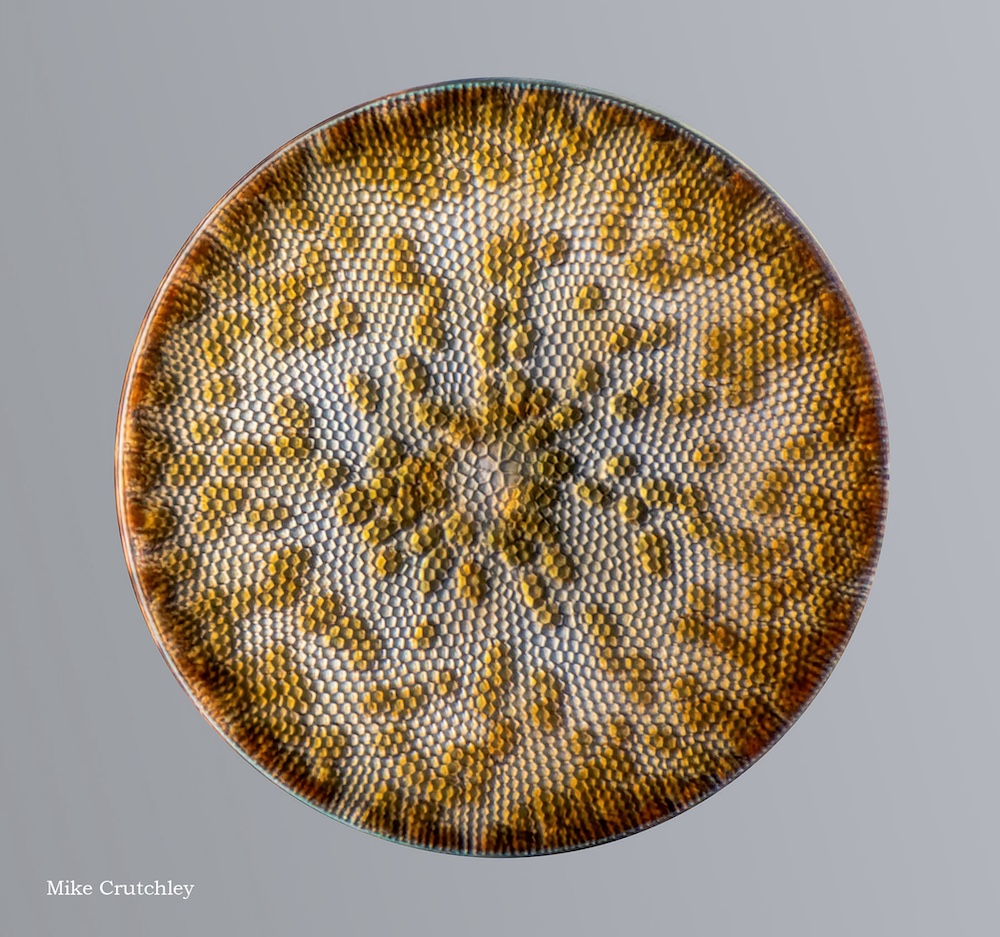
Over the weekend, I called at the house of Mike Crutchley, one of the Climate Fest’s exhibition photographers. Mike is remarkably modest about his photographs, his background has been one of high level scientific research and invention, and he considers his photography more a reflection of a fascination with the world around us rather than any artistic ability. However, he’s succeeded in producing some of the most stunning micro-photography I’ve ever seen.
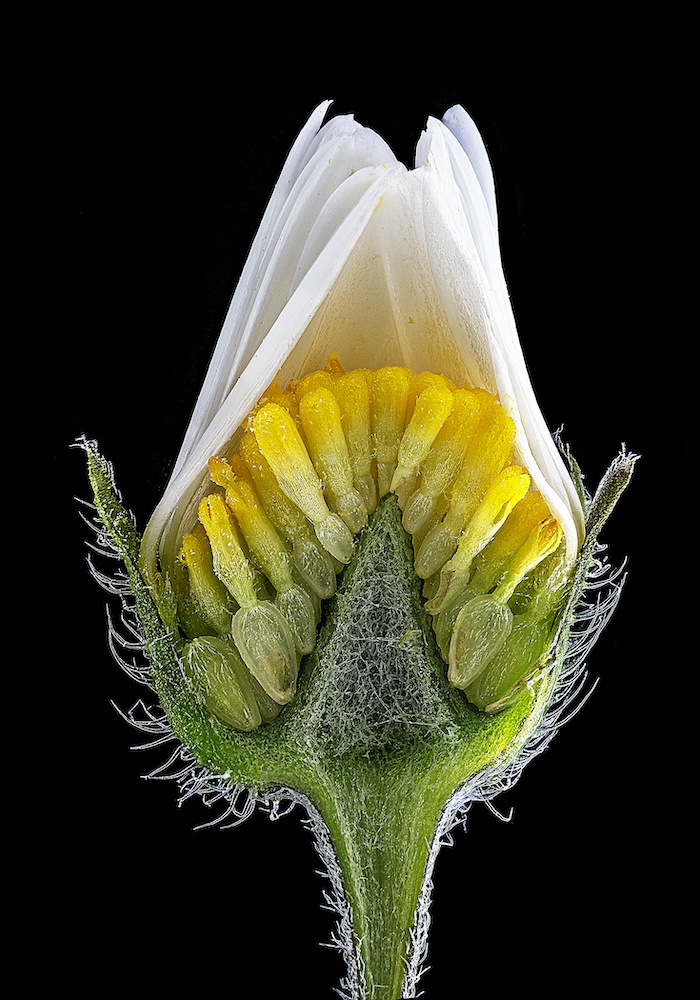
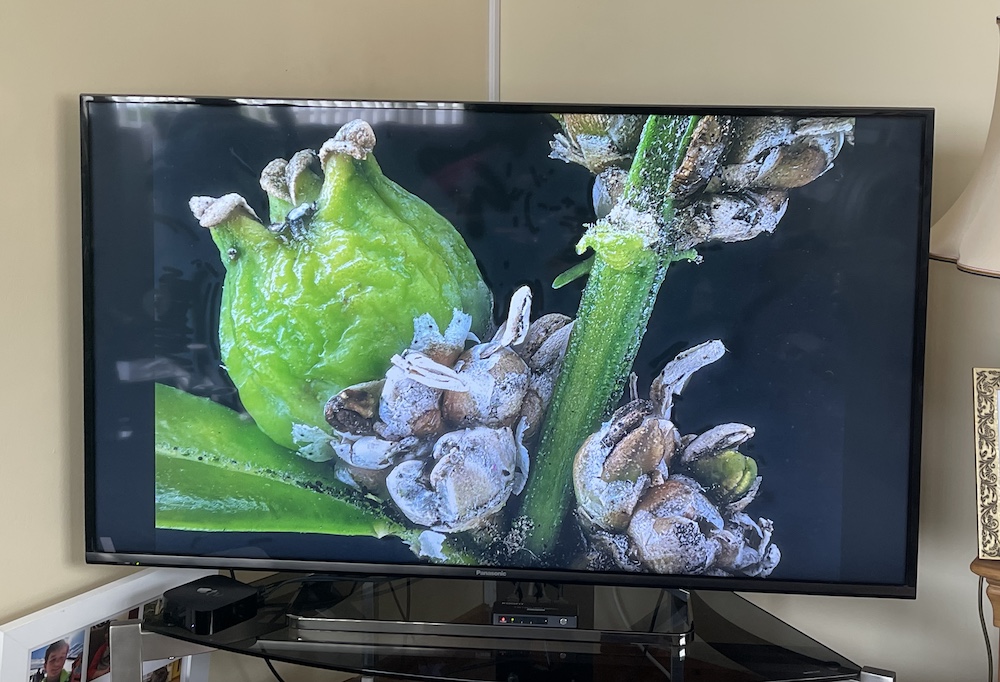
I had the tip off about Mike’s work through Heidi of Popty Press, another one of the festival’s partners. Having seen his collection of photographs, she sent me an email suggesting I might be interested in getting in touch with regard to the show. I took her lead and contacted Mike, and a few days later I found myself sitting in his front room going through a catalogue of extraordinary images flashed up on his TV screen.
Mike has worked at the highest levels of practical science, creating super-resilient materials for the aeronautics and car industries. Born at a time when dyslexia was just classed as academic inability, Mike broke free of the imposed stereotypes and went on to lead a life of scientific ingenuity. He had a gift for thinking outside the box, and not only that, but one for inventing solutions to intractable problems – he devised methods of producing mneumonic steel for Concorde aircraft turbines, and high resistance ceramics for the electronics industry. A leader in his field, he was frequently consulted by other scientists and industry specialists.
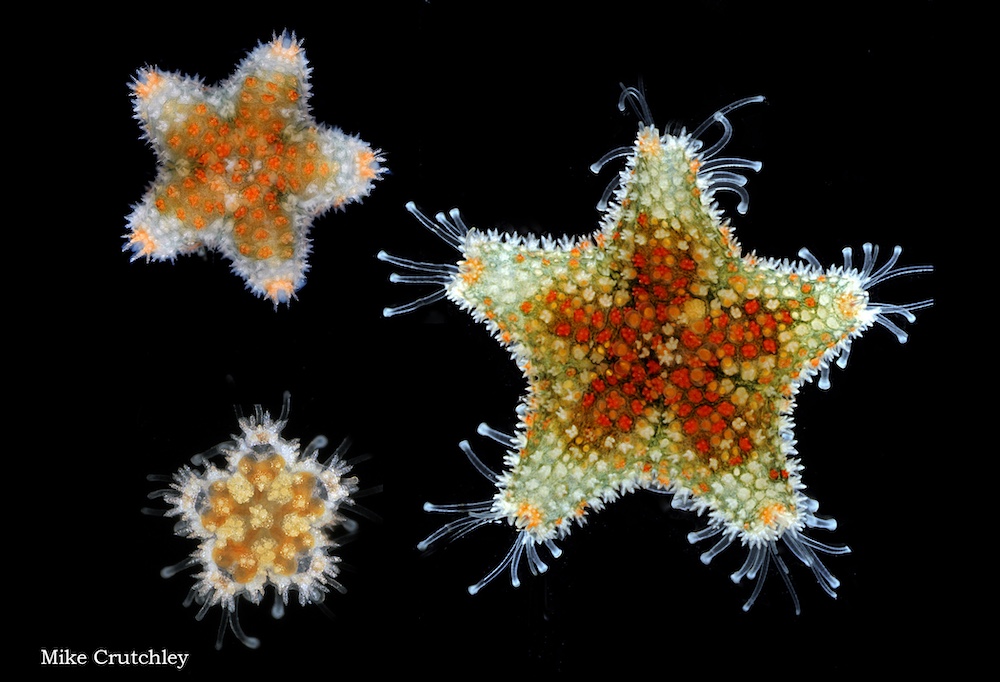
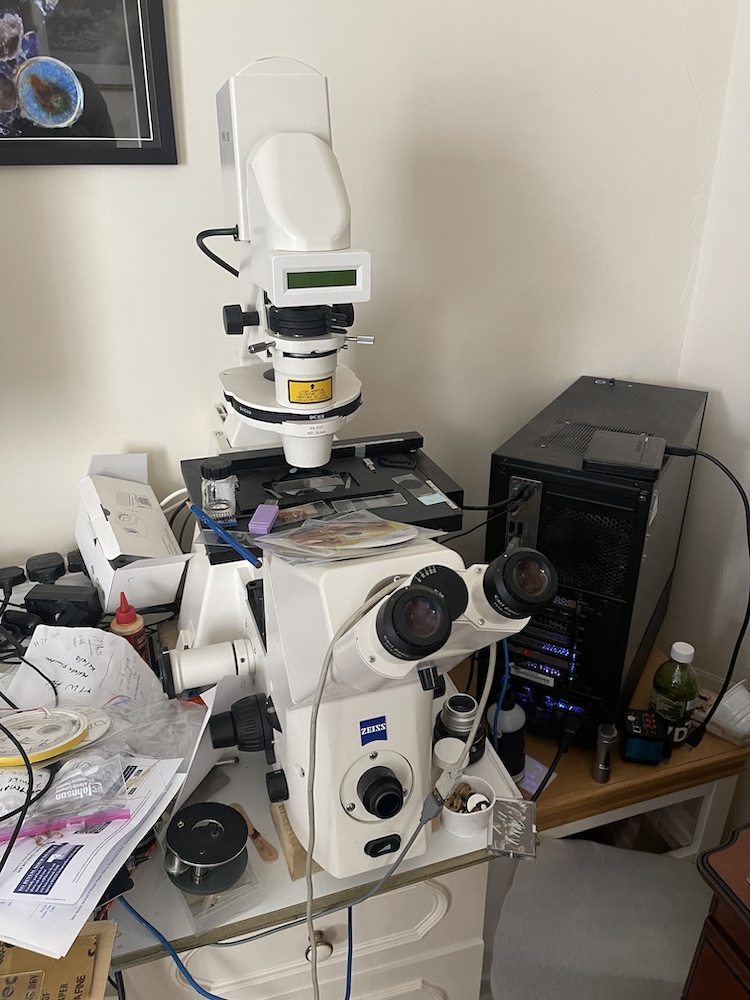
All of this seemed a long way from the quiet Haverfordwest suburb in which he now lives. Surrounded by prints, camera lenses and giant microscopes, he likes to spend his time capturing the wonders of our micro-world.
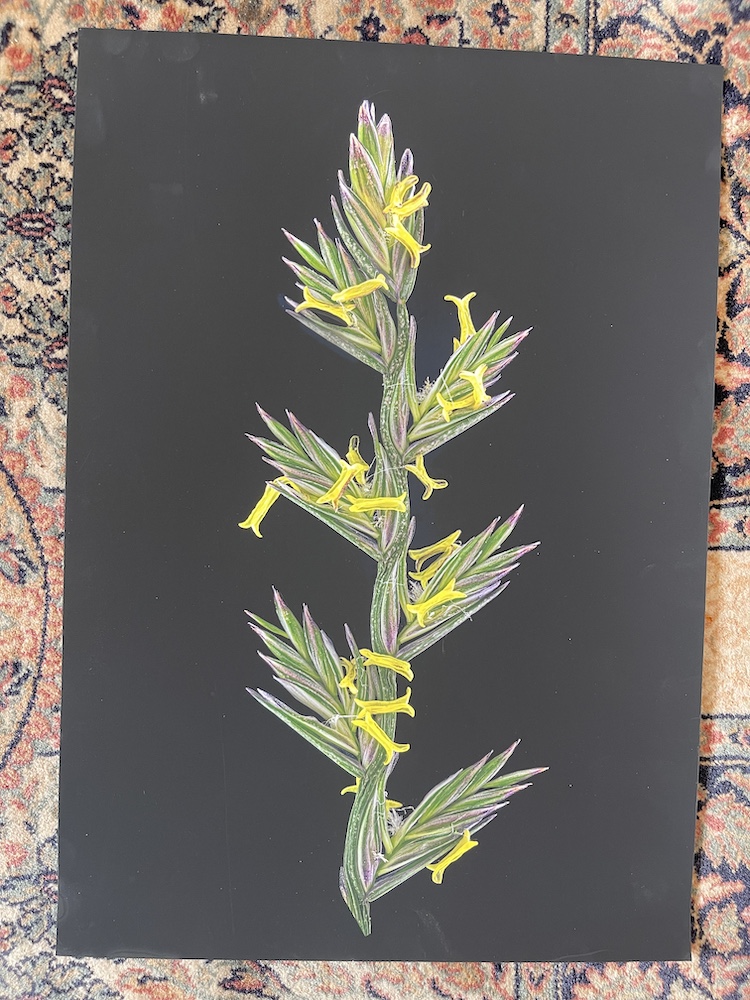
A simple blade of grass can reveal spectacular beauty under his careful photographic processes, and he captures the world’s miniature wonders with painstaking attention to detail. ‘We don’t often realise what we have beneath our feet,’ he told me, ‘a drop of sea water or tiny bit of cow manure can reveal extraordinary forms and creatures. The flowers on a blade of grass can be incredibly beautiful.’ I looked at a selection of recent prints laid out on the floor, and could see what he meant.
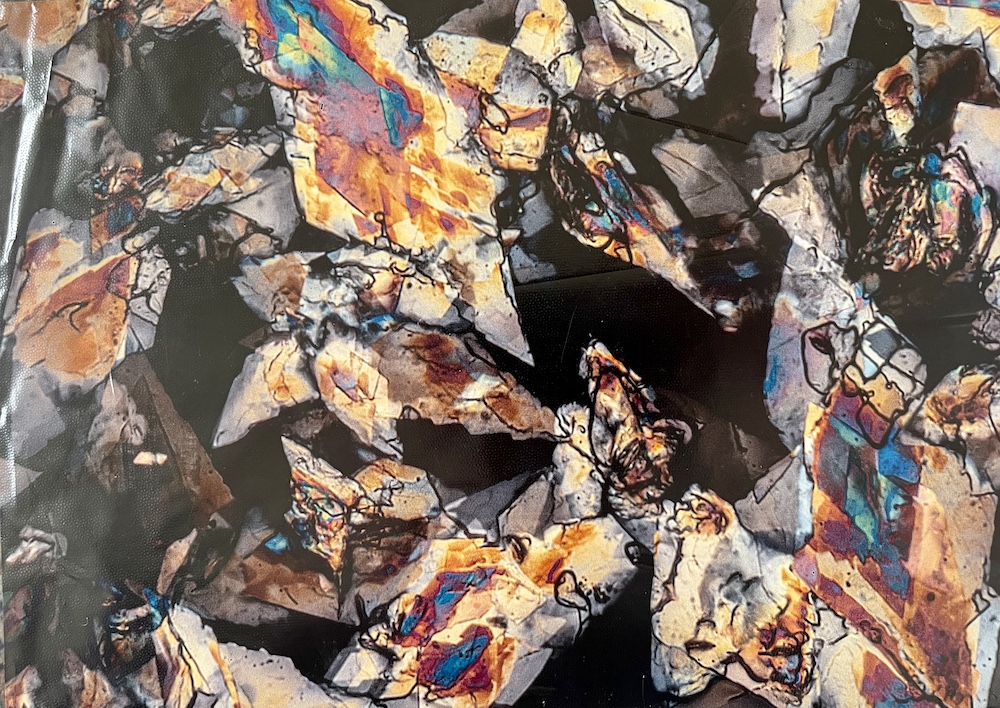
Mike can photograph anything under his powerful microscopes give it interest with his scientist’s eye. A picture of Viagra crystals would have looked great on the walls of any contemporary gallery.
A chance to see some of these amazing images will be available over the weekend of the 5th and 6th July. Mike will have a section in the Green Barn given over to his prints, the results of super-high resolution and careful microscopic image processing. Each one of them is a window to the richness and intricacy of the natural world, even on the tiniest level.